Takt connects labor management, wages, revenue rates, and engineered labor standards to calculate transaction-level cost and margin in real time. Track cost per unit, cost to serve, and process-level profitability across customers, departments, and facilities.

Why Warehouse Cost-to-Serve Is Often Miscalculated
Most warehouse financial reporting relies on averages, spreadsheets, or delayed accounting data. Labor rates change. Revenue agreements evolve. Productivity fluctuates by process. Without a labor management system that ties wages and revenue to real operational data, cost per unit and margin visibility remain inaccurate.
Data Driven
Blended Labor Rates Mask True Cost Structure
Most warehouses apply a blended hourly rate across full-time, part-time, seasonal, and 3PL labor. This approach hides meaningful cost differences by facility, shift, and labor type. Overtime, premiums, and regional wage variation further distort reporting. Without configurable, fully burdened labor rates, warehouse margin analysis is based on assumptions rather than transaction-level cost accuracy.
Categorizing
Revenue Is Rarely Tied to Operational Activity
Customer pricing is often structured around per-piece, per-order, or activity-based rates. Yet many operations track revenue at a summary level without aligning it to engineered labor standards or actual quantities processed. When revenue is disconnected from operational data, 3PL profitability and warehouse cost-to-serve analysis become reactive instead of actionable.
Static Reports Miss Real-Time Margin Shifts
Volume mix, labor allocation, indirect work, and process efficiency change throughout the day. Traditional financial reports generated weekly or monthly fail to capture real-time margin erosion. Without a labor management system that calculates cost and revenue at the transaction level, leaders cannot intervene before profitability is impacted.
Margin Blindness
Delayed financial data hides underperforming processes and eroding customer profitability.
Reactive Decisions
Without real-time cost visibility, improvement efforts focus on activity—not financial impact.
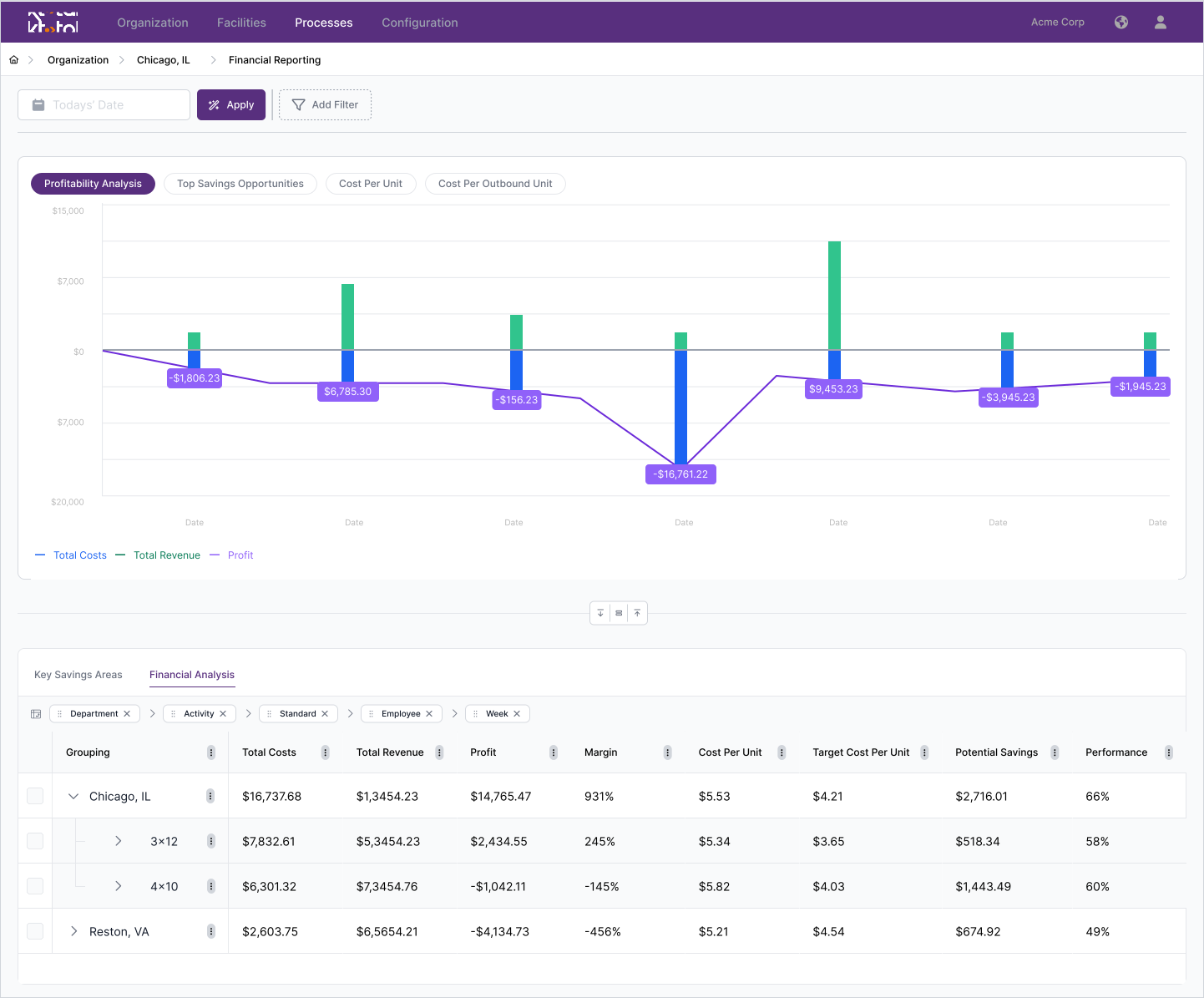
Precise. Configurable. Governed.
Configure Labor Costs and Track Cost Per Unit in Real Time
Labor Type Rates
Define fully burdened wages for full-time, part-time, seasonal, temporary, and 3PL labor. Eliminate blended averages and model true labor cost inside your labor management system.
Shift & Facility Control
Configure wage rates by warehouse and shift to reflect regional pay differences, premiums, and overtime structures. Maintain accurate cost-to-serve analysis across sites.
Wage Versioning
Update wage configurations as pay rates evolve while preserving historical accuracy. Date-based controls ensure financial reporting stays consistent over time.
Target Cost Modeling
Combine configured wages with engineered labor standards to calculate actual and target cost per unit, revealing variance and margin improvement opportunities.
Aligned. Structured. Profitable.
Configure Revenue by Activity and Track Profitability in Real Time
Per-Unit Pricing
Define revenue rates per piece, per order, or per transaction. Align pricing directly to quantity and operational activity to measure real revenue at the warehouse floor level.
Activity-Based Rates
Configure pricing for kitting, value-added services, returns, and other specialized workflows. Measure profitability by process—not just by customer summary totals.
Revenue Versioning
As customer contracts evolve, update revenue rates with date-based controls. Preserve historical accuracy while ensuring current profitability reporting reflects live agreements.
Margin Alignment
When revenue rates are combined with configured labor cost and engineered labor standards, Takt calculates real-time margin and cost-to-serve across customers and departments.
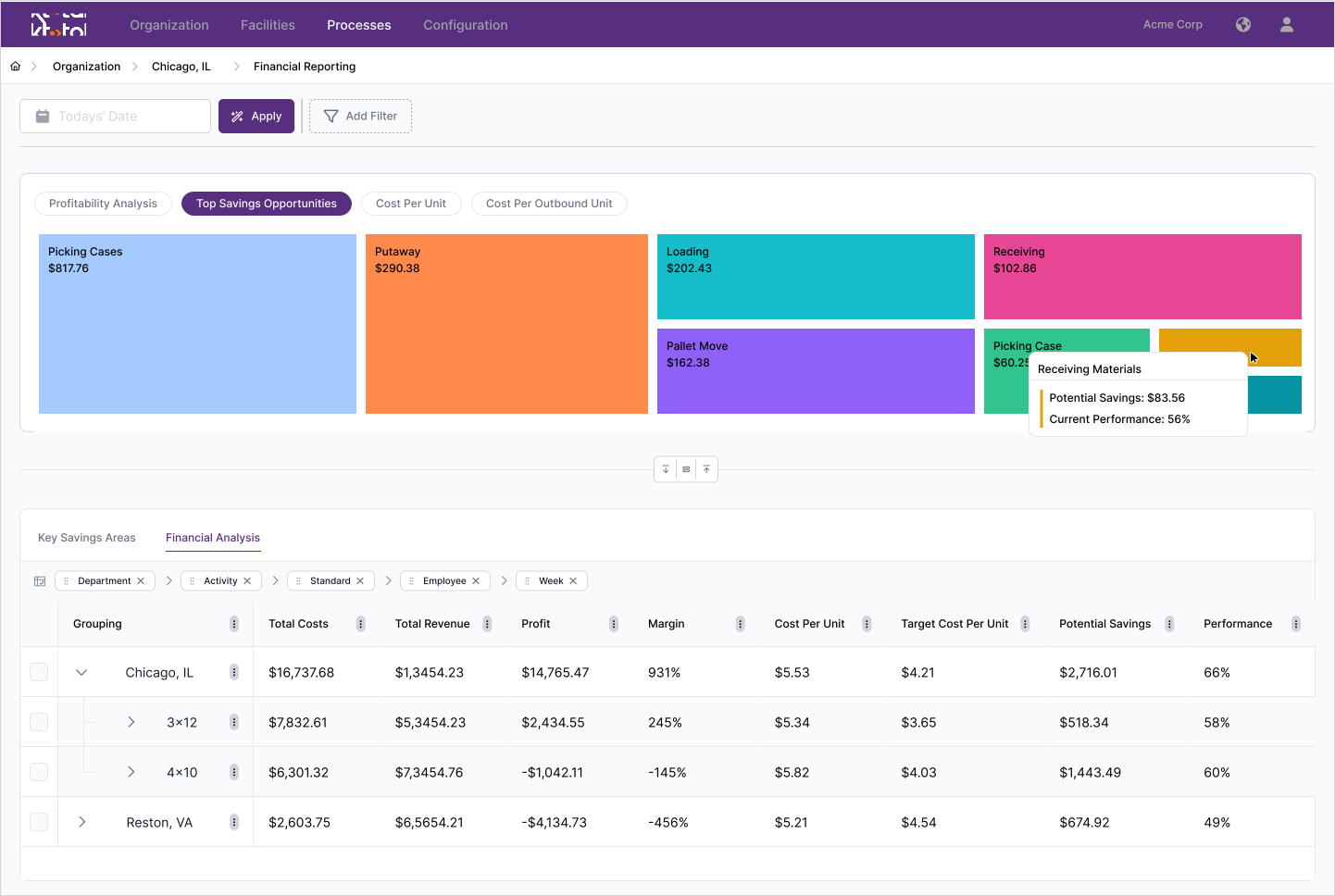
Visible. Actionable. Profitable.
When labor cost and revenue are configured inside your labor management system, financial performance becomes operationally actionable. Takt enables real-time visibility into cost per unit, cost-to-serve, and margin—helping leaders prioritize improvement efforts based on financial impact.
Margin Visibility
Track profitability by department, customer, activity, or engineered labor standard. Identify which processes generate margin and which quietly erode supply chain performance.
Cost Per Unit
Monitor actual versus target cost per unit in real time. Quickly detect variance driven by labor mix, overtime, indirect work, or productivity shifts.
Customer Profitability
Measure cost-to-serve at the customer level using live operational data. Support 3PL pricing decisions and contract negotiations with defensible financial insight.
Focused Improvement
Direct supervisors and continuous improvement teams toward the highest financial opportunities. Optimize warehouse operations based on margin—not just activity volume.

FAQ's
What is cost to serve in a warehouse?
Why is warehouse cost-to-serve often inaccurate?
How do you calculate cost per unit in a warehouse?
How does a labor management system improve financial visibility?
How do 3PLs use cost-to-serve analysis?
Can warehouse wages change without breaking reporting?
What is activity-based warehouse pricing?
How does real-time margin tracking help operations?
What is the difference between cost reporting and financial visibility?

"Takt’s advanced platform equips ODW teams with real-time productivity insights, enabling more effective coaching, streamlined workflows, and a happier, more engaged workforce. With tools that drive efficiency, reduce costs, and enhance service quality, ODW can deliver faster turnaround times and a more reliable supply chain."
ODW Logistics