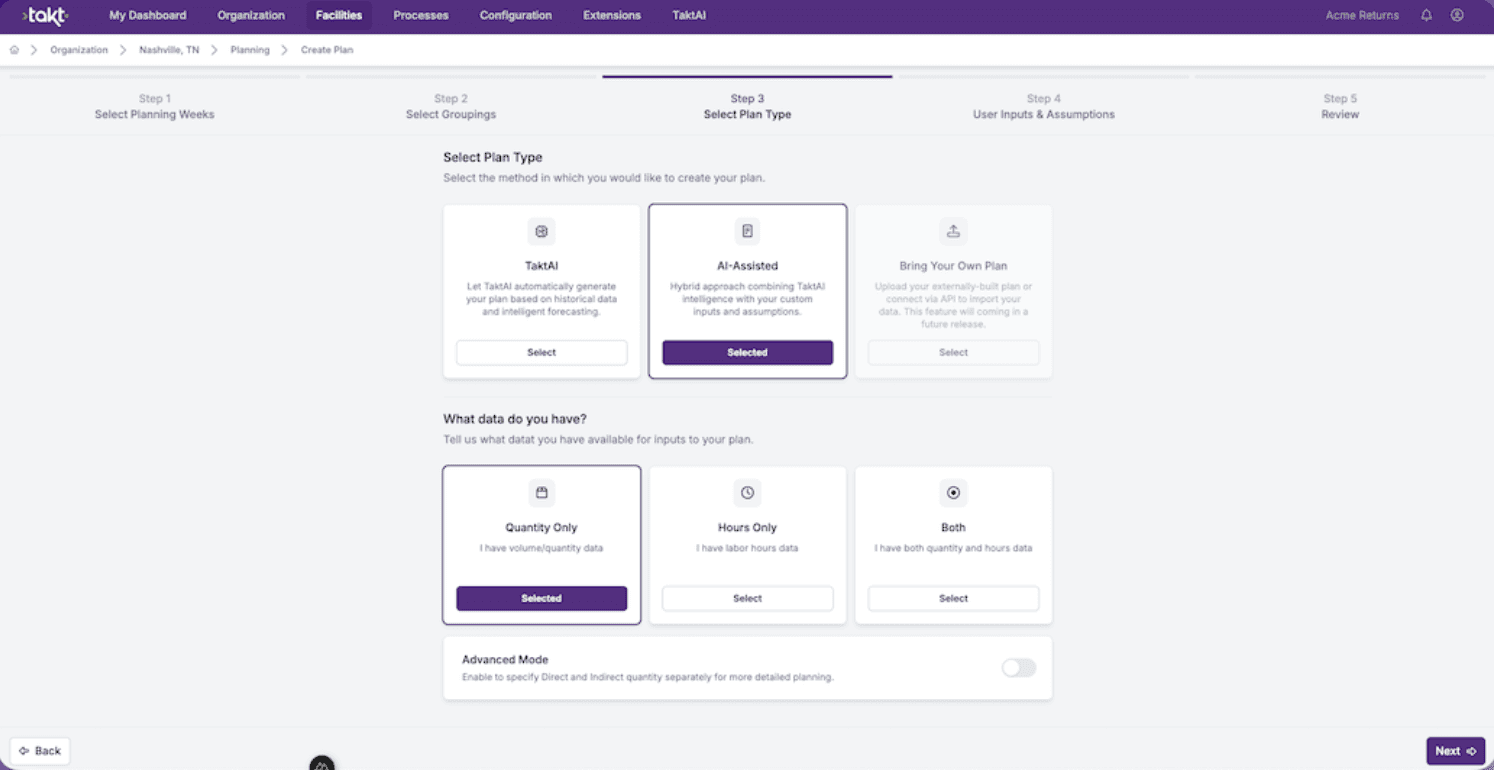
El software de planificación de mano de obra de almacén de Takt convierte las previsiones en planes de trabajo ejecutables. Con el uso del Cubo de Planificación propietario de Takt, los equipos pueden planificar a un nivel alto o hasta estándares de trabajo específicos. Ajuste la demanda, las suposiciones de productividad o las horas y el sistema recalcula al instante. Traiga su propia previsión o genere una con TaktAI, luego entregue a las operaciones un plan detallado con objetivos diarios y visibilidad en tiempo real del plan frente a lo real.






Pronosticar. Planificar. Ejecutar.
Pronóstico de mano de obra flexible para operaciones de almacén
Trae tu propio pronóstico
Importa los pronósticos que ya usas—de señales de demanda de los clientes, equipos de merchandising, horarios de transporte o modelos de planificación interna. Takt convierte las unidades pronosticadas en requisitos de mano de obra utilizando estándares de trabajo técnicamente diseñados.
Pronóstico TaktAI
Genera pronósticos automáticamente usando TaktAI. El sistema analiza datos operativos históricos, patrones de volumen y tendencias de mezcla de trabajo para producir un pronóstico de demanda confiable para la planificación de mano de obra.
Pronóstico por Departamento
Planifica la demanda a nivel de departamento o actividad. Divide las previsiones en flujos de trabajo como recepción, selección, empaquetado, devoluciones u otros para que los requisitos de mano de obra se ajusten a la realidad operativa.
Actualizaciones Continuas de Pronósticos
Actualiza las previsiones a medida que cambia la demanda durante la semana. El cubo de planificación recalcula instantáneamente los requisitos de mano de obra para que las operaciones se mantengan alineadas con el volumen real.
Vivo. Integrado. Gestionado.
Herramientas que Hacen a los Planificadores de Mano de Obra Más Efectivos
Modelado de la Mezcla de Trabajo
Ajusta las previsiones según el tipo de trabajo, como selecciones individuales, selección de cajas, movimientos de paletas o devoluciones, y observa instantáneamente el impacto en las horas de trabajo y las necesidades de personal en todos los departamentos.
Planificación detallada de turnos
Genera planes de trabajo detallados por turno, departamento y actividad. Los planificadores pueden ver exactamente cuántas personas se necesitan y dónde se debe realizar el trabajo a lo largo del día.
Planificación de la Fuerza Laboral Estacional
Modela cambios en productividad para trabajadores estacionales o temporales. Ajusta los niveles de rendimiento esperados para garantizar que los planes laborales sean realistas durante los períodos de máxima actividad.
Modelado de Mejora Continua
Incorpora las mejoras de productividad de las iniciativas de mejora continua. Actualiza las suposiciones de rendimiento y observa inmediatamente cómo las mejoras reducen las horas de trabajo y el costo por unidad.
Pronosticar. Planificar. Ejecutar.
Planificar Toda la Operación del Almacén
Planificación de Mano de Obra Directa
Planifique el personal para las tareas de picking, empaque, recepción y otros flujos de trabajo esenciales utilizando estándares de trabajo diseñados y niveles de productividad esperados para determinar las horas de trabajo necesarias.
Visibilidad del Trabajo Indirecto
Ten en cuenta el trabajo de apoyo como ensamblaje, limpieza, capacitación y tareas de proyecto. Asegúrate de incluir la mano de obra indirecta en tu plan de personal para que la carga de trabajo total se represente con precisión.
Supervisores y Tareas del Equipo
Incluye a los gerentes, líderes y actividades basadas en equipos en el plan. Modela roles que apoyen las operaciones pero que no estén vinculados a una unidad específica de trabajo.
Modelado de Utilización y UPH
Utiliza objetivos de utilización y rendimiento esperado de unidades por hora para crear planes de trabajo realistas que reflejen cómo se ejecuta el trabajo en el piso del almacén.
¿Qué es la planificación de trabajo en el almacén?
La planificación de la fuerza laboral en el almacén convierte la demanda pronosticada en requisitos de personal en todos los departamentos, procesos y turnos. Un sistema moderno de planificación laboral utiliza estándares laborales elaborados, rendimiento histórico y datos en tiempo real para determinar cuántas personas se necesitan para cumplir con los objetivos operativos. En lugar de reaccionar a los cambios de volumen después de que ocurren, los equipos pueden alinear proactivamente la mano de obra con la carga de trabajo, controlar las horas extras y mantener los niveles de servicio en toda la cadena de suministro.
Pronóstico
Pronóstico para el Plan de Mano de Obra
Convierte el volumen de pedidos pronosticado, recibos entrantes o unidades en horas de trabajo requeridas utilizando estándares de trabajo diseñados. Al vincular la demanda directamente con suposiciones de productividad basadas en estándares, los planificadores pueden determinar exactamente cuánta mano de obra se necesita para completar el trabajo. Esto crea un plan de trabajo estructurado que alinea los niveles de personal con la carga de trabajo esperada a través de turnos y departamentos, brindando a los equipos de operaciones un objetivo claro para ejecutar.
Planes detallados
Planificar por Proceso
Desglosa los requisitos de mano de obra por departamento, actividad y proceso para que los equipos comprendan exactamente dónde se necesitará mano de obra en todo el almacén. En lugar de planificar a un nivel alto, los planificadores pueden ver cómo se distribuye la carga de trabajo entre las actividades de picking, embalaje, recepción u otros procesos. Este nivel de detalle ayuda a los equipos de operaciones a responder a los cambios en la combinación de trabajo y a asignar mano de obra a las áreas con mayor demanda.
Planificación Basada en el Rendimiento
Modela planes de trabajo utilizando niveles de rendimiento esperados vinculados a estándares de trabajo diseñados o productividad histórica. Los equipos pueden ajustar las suposiciones de productividad para tener en cuenta a los trabajadores temporales, las curvas de formación, la automatización o las iniciativas de mejora. Esto permite a los planificadores crear objetivos laborales realistas que reflejen cómo opera realmente el almacén en lugar de depender de promedios estáticos.
Ejecución en Tiempo Real
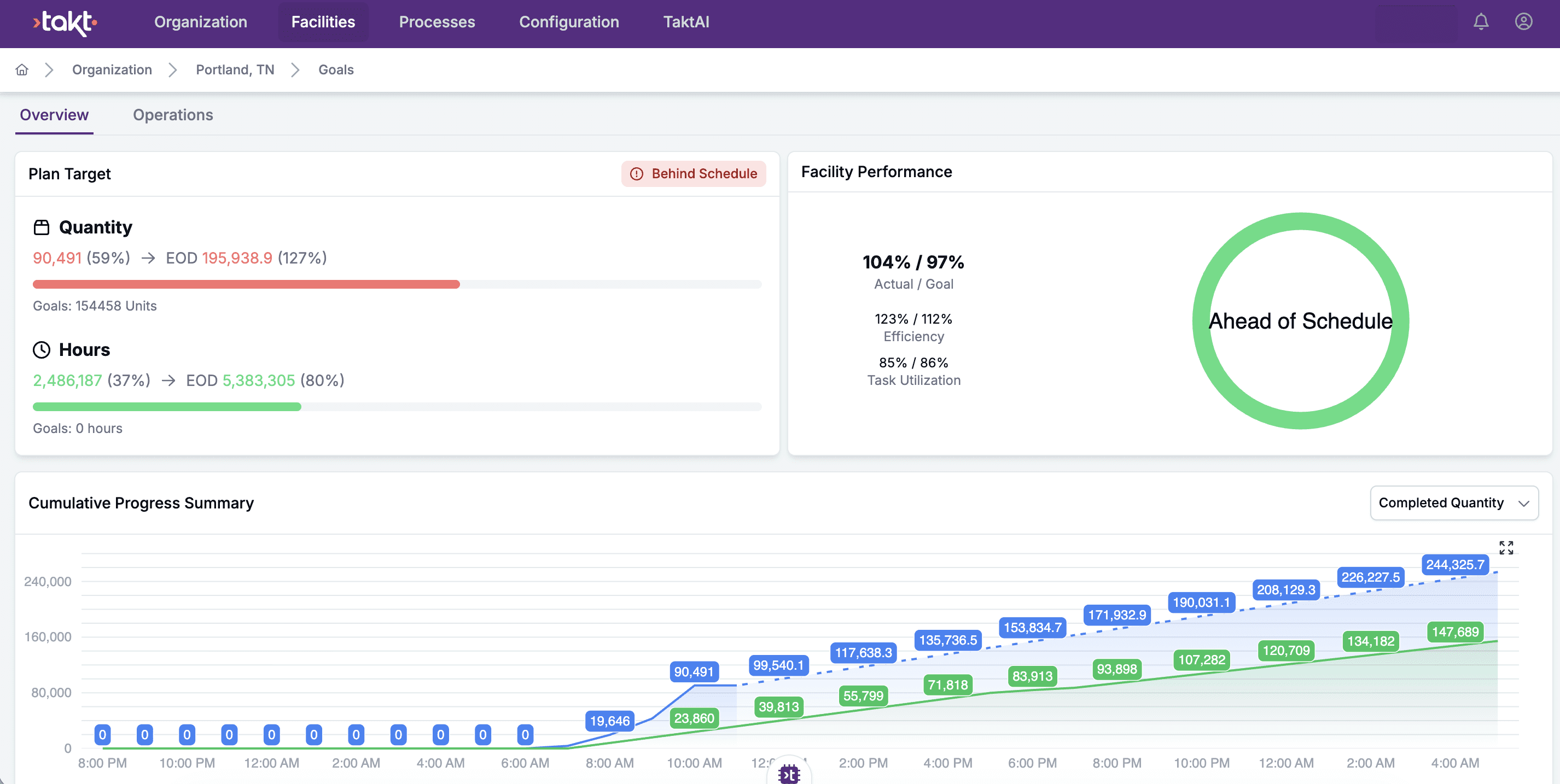
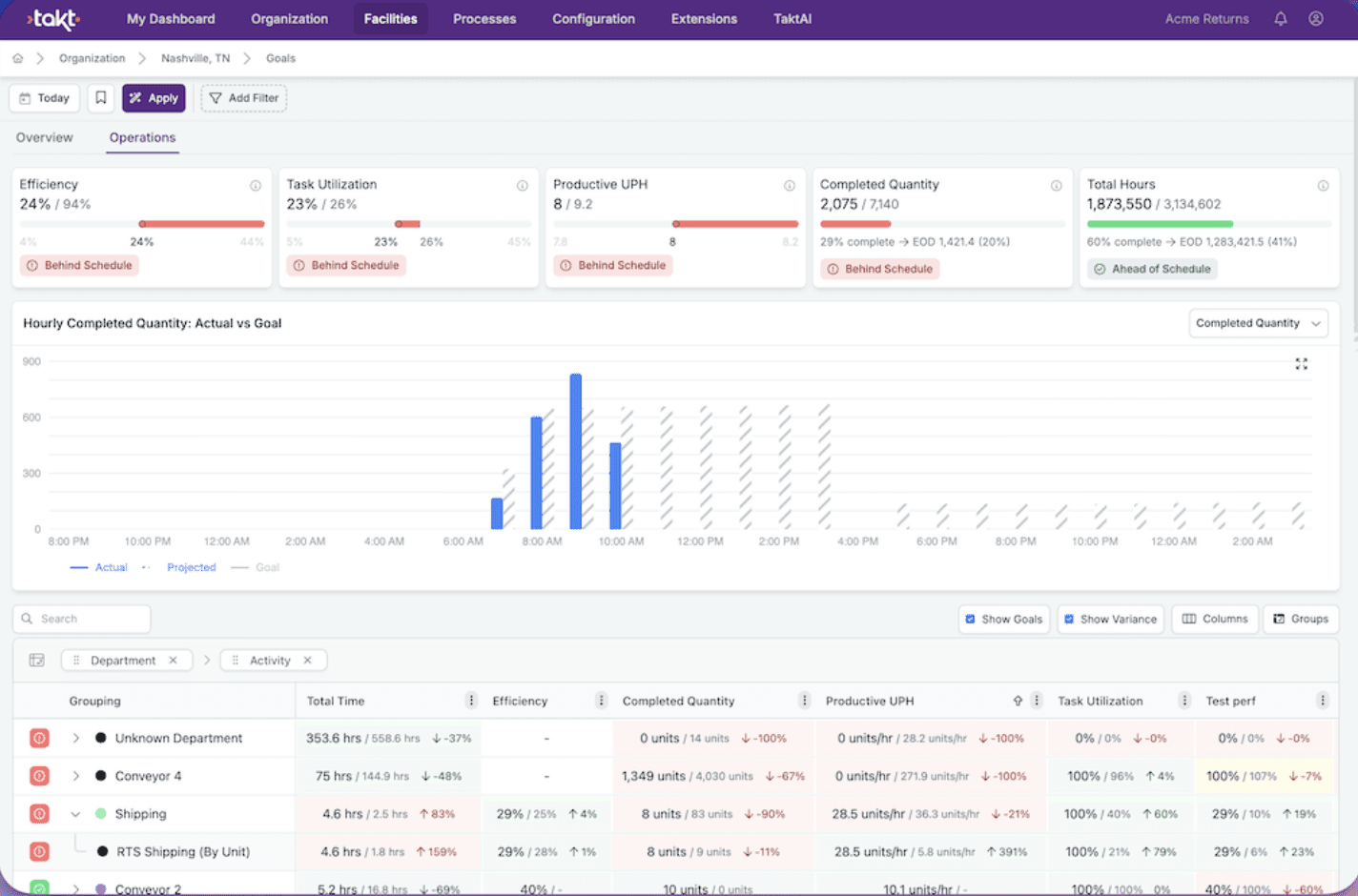
Convierta los planes de trabajo en objetivos diarios con visibilidad en tiempo real del plan frente a lo actual.
Mejora Continua
Utiliza datos de rendimiento histórico para refinar futuros planes de trabajo.
Preguntas frecuentes
¿Qué es la planificación laboral en el almacén?
¿Por qué es importante la previsión de mano de obra para los almacenes?
¿Cómo mejoran los estándares de trabajo diseñados la planificación laboral?
¿Cuál es la diferencia entre la previsión de mano de obra y la planificación de personal?
¿Cómo puede la planificación de la mano de obra en el almacén reducir las horas extra?
¿Cómo planifican los almacenes para la mano de obra estacional?
¿Qué es el seguimiento del trabajo planificado frente al real?
¿Cómo mejora el rendimiento del almacén la planificación laboral en tiempo real?
¿Qué debería incluir el software de planificación de mano de obra en almacenes?
¿Cómo mejora la planificación laboral la productividad del almacén?
¿Puedo importar mi propio plan laboral o pronóstico a Takt?
¿Qué es el pronóstico de demanda laboral?

"La avanzada plataforma de Takt proporciona al equipo de ODW información sobre productividad en tiempo real, lo que permite un entrenamiento más efectivo, flujos de trabajo optimizados y una fuerza laboral más feliz y comprometida. Con herramientas que impulsan la eficiencia, reducen costos y mejoran la calidad del servicio, ODW puede ofrecer tiempos de respuesta más rápidos y una cadena de suministro más confiable."
Logística ODW